
Purvis Young
(1943–2010)
BornMiami, Florida, United States
DiedMiami, Florida, United States
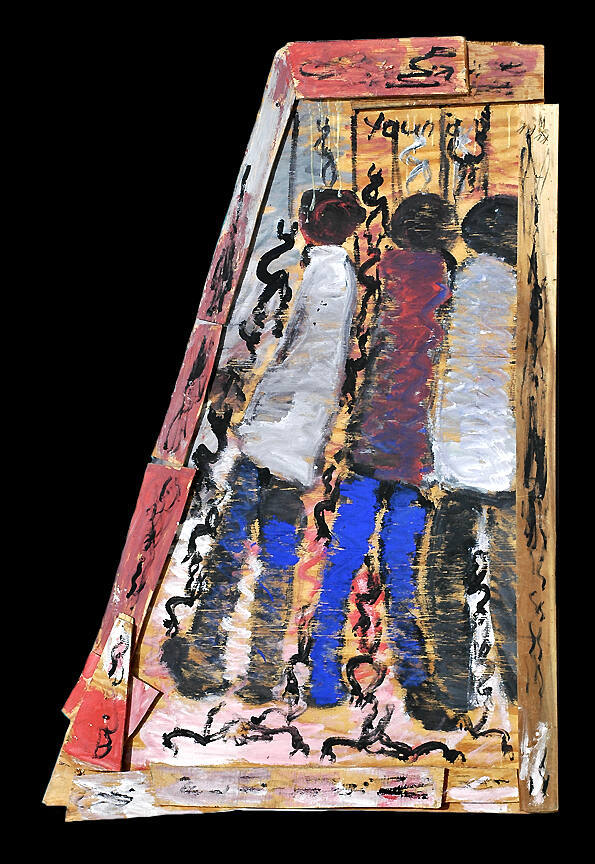
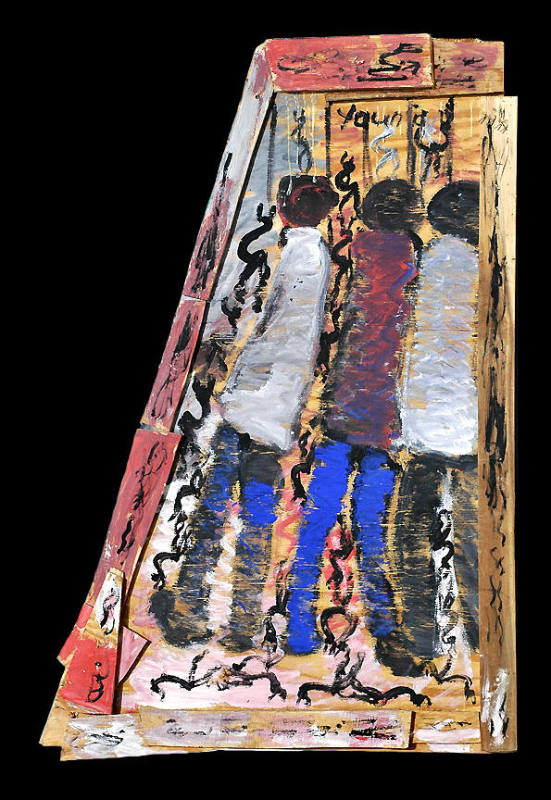
BiographyPurvis Young’s art was inspired by and made for his community in Miami, Florida, which had been marginalized and displaced over decades of systematic neglect and urban renewal. He salvaged materials from the streets of a historically Black neighborhood cut through with highways and left to decay. Scraps of wood, metal, and cardboard became canvases for his gestural forms, created with rapid brushstrokes and accented with washes of color. These were regularly nailed to boarded-up buildings, enlivening the blighted area with overlapping layers of vibrant compositions. He repeated motifs such as wild horses, pregnant women embodying hope for the future, and crowds of people with their arms uplifted. He told the Miami News in 1985, “They’re reaching up to get a bit for themselves—jobs, happiness, the things that they can’t seem to have right now. And freedom.” Expressive scenes of everyday life capture funeral processions and baseball games; Young often pasted series of images on different themes on the pages of discarded books.Young was born in Miami in 1942 and grew up in the Overtown neighborhood that would shape his later work. He learned to paint and draw from his uncle, Irvin Young, a sign painter. While serving three years in prison, he became inspired to dedicate his life to art. He voraciously studied books on art history, citing as especially influential El Greco, Vincent van Gogh, and Paul Gauguin. After he was released in 1964, he returned to Overtown. There he was galvanized by reading about the mural movement of the 1960s, particularly its uplifting of communities of color. As he said in an interview with the art historian Paula Harper, “In Chicago and Detroit these guys painted murals on buildings, and I said, ‘I ain’t gonna stand on no street corner all day, I’m going to paint!’” Starting in the early 1970s, he covered the defunct bakeries in Goodbread Alley with paintings, which he sold off the wall to visitors. The monumental mural project attracted local media attention, leading to national acclaim.
He continued to fill his studio—a cavernous warehouse space—with paintings stacked up to the ceiling. Over time, he experimented with new subjects, such as war scenes and insects consuming human figures, in the 1990s and early 2000s; his body of work grew to include thousands of paintings, drawings, assemblages, and collages. He died in 2010.
Allison C. Meier, 2025
Text written as part of “Rethinking Biography,” an initiative supported by the Institute of Museum and Library Services (IMLS).
Loading ...