
Gregory "Mr. Imagination" Warmack
(1948–2012)
BornMaywood, Illinois, United States
ActiveChicago, Illinois, United States
ActiveBethlehem, Pennsylvania, United States
ActiveAtlanta, Georgia, United States
DiedAtlanta, Georgia, United States
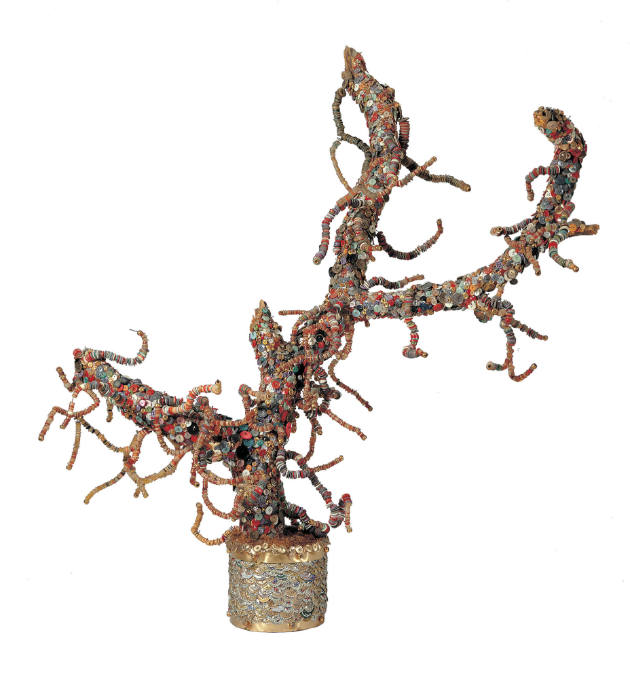
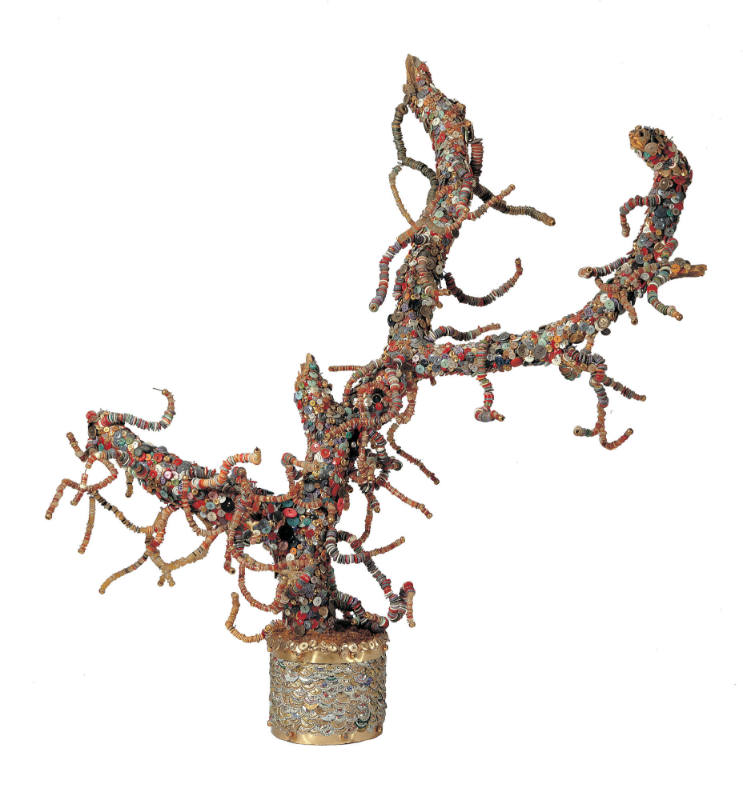
BiographyAfter a near-death experience during which he experienced visions of an ancient civilization, Gregory Warmack reinvented himself as Mr. Imagination, or simply Mr. I. He used a range of cast-off materials, but especially bottle caps, to create thousands of elaborate sculptures. Many evoked royal objects such as thrones and staffs; faces of kings and other regal figures were carved from industrial sandstone, a byproduct of steel casting. He also turned old paintbrushes into portraits and created assemblages from cat-food cans, ping-pong paddles, buttons, sponges, and roof tin, frequently referencing the motifs of ancient Egypt and African masks.Warmack was born in 1948 in Maywood, Illinois, and grew up on the South Side of Chicago. At a young age, he started carving small objects and crafting jewelry from discarded material to sell on the streets to support himself. He took on the moniker Mr. Imagination after he survived being shot and robbed in 1978 and began avidly creating art with a new drive to express positivity in the world around him through what others cast off. As he once stated, “Everything I find, I reuse in my art and give it a new purpose. I teach others that the creative process is open to all if you just use your eyes and your imagination.”
His first major solo show opened in 1983 at the Carl Hammer Gallery in Chicago. He relocated to Bethlehem, Pennsylvania, in 2002 and was involved in numerous local community-focused art projects, such as transforming a bus shelter, and major commissions such as pieces for Walt Disney World and the 1996 Olympics in Atlanta. Following a catastrophic fire in 2008 that destroyed his home and studio, he moved to Atlanta, where he used the salvaged remains of charred sculptures in his art. He died in 2012.
Allison C. Meier, 2025
Text written as part of “Rethinking Biography,” an initiative supported by the Institute of Museum and Library Services (IMLS).