
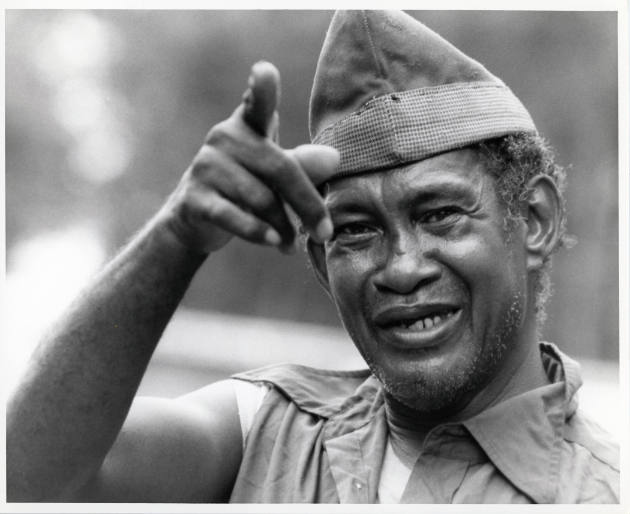

Royal Robertson
(1936–1997)
BornLouisiana, United States
DiedBaldwin, Louisiana, United States
BiographyRoyal Robertson created fiery paintings with an evangelistic compulsion that combined apocalyptic warnings with science-fiction tropes. Depictions of spaceships, aliens, laser guns, futuristic architecture, and fantastic monsters are annotated with speech bubbles referencing the Bible, science-fiction books, comics, pornographic magazines, and tabloids. Some of this text details Robertson’s process: “Worked on that drawing on April 5 at 4:15 AM.” Other pieces reveal his keen interest in numerology, with calendars divining cosmic events appearing on the backs of some pieces. He regularly worked on both sides of poster board, creating colorful scenes with markers, ballpoint pens, paint, and a dash of glitter.Robertson considered himself a “prophet,” and his yard confronted visitors with handmade messages of doom and judgment (along with his own creative takes on “no trespassing” signs, such as “Keep Out Here Crazy Bastards Whoremongers”). Inside, he covered the walls and surfaces of his home with art and shrines. Born in 1936, he spent much of his life in Baldwin, Louisiana. He completed eighth grade and then apprenticed as a sign painter. This professional work informed how he recorded the visions of the future and space travel that he began experiencing as a teenager. Some pieces have rounded corners as if seen through a television set. A separation from his wife, Adell, who left with their children for Texas in the 1970s, fueled vitriolic and misogynistic ramblings in his art, along with images of voluptuous temptresses.
Self-appointed as the “Libra Patriarch Prophet Lord Archbishop Apostle Visionary Mystic Psychic Saint Royal Robertson,” Robertson and his ever-evolving outdoor environment of signs became a local oddity. In 1992, much of his house and yard was destroyed in Hurricane Andrew. He died in 1997, the same year his art was included in the exhibition The End Is Near: Visions of Apocalypse, Millennium, and Utopia at the American Visionary Art Museum in Baltimore. The graphic style of his work and his fixation on good and evil as interpreted through pop culture and prophecy continue to captivate; a painting of his was featured on the cover of Sufjan Stevens’s 2010 album The Age of Adz.
Allison C. Meier, 2025
Text written as part of “Rethinking Biography,” an initiative supported by the Institute of Museum and Library Services (IMLS).